
African Parliamentarians Adopt Accra Declaration at 2025 IPPFoRB Regional Academy
Accra, Oct. 6–8. The International Panel of Parliamentarians for Freedom of Religion or Belief (IPPFoRB) held a Regional Academy in Accra, Ghana, bringing together XX participants from XX Sub‑Saharan African countries for three days of intensive training, dialogue, and exchange on strengthening freedom of religion or belief (FoRB) across the region.
The Academy convened Members of Parliament and one youth representative from Ghana, Malawi, Sierra Leone, Nigeria, Uganda, Zambia, and Kenya, creating a collaborative space for lawmakers to deepen their understanding of FoRB, share local experiences, and explore practical approaches to advancing human rights in their national contexts.
Expert-Led Sessions
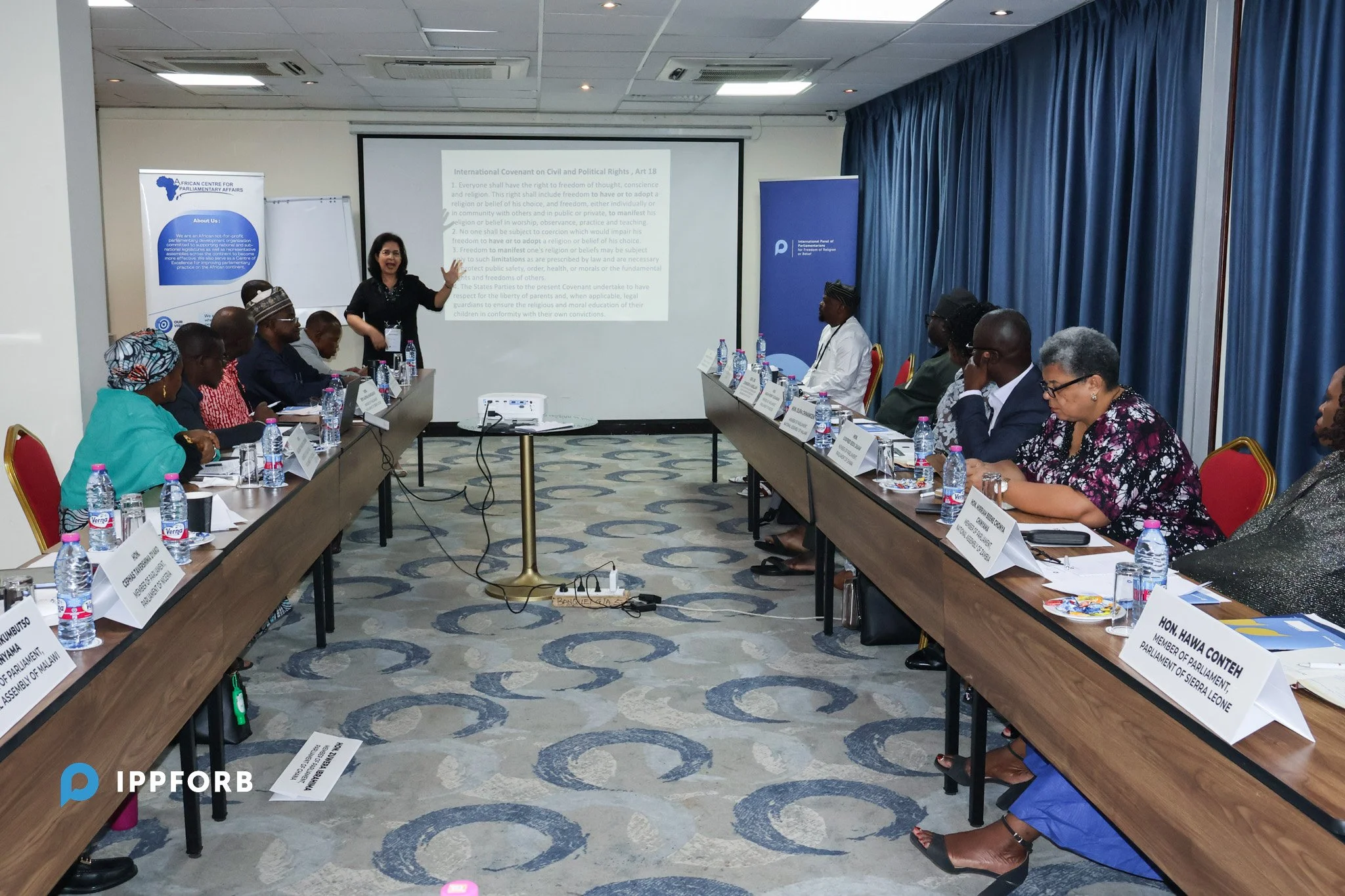
Participants engaged with leading regional and international experts, including:
Nazila Ghanea, United Nations Special Rapporteur on Freedom of Religion or Belief
Illja Djadi, Senior Analyst on Sub‑Saharan Africa at Open Doors
Prof. Johnson Mbillah, Founding Director of the Interfaith Unit of the Presbyterian Church of Ghana
Gifty Adika, Senior Governance Advisor at the African Centre for Parliamentary Affairs
Fernanda Elena San Martín Carrasco, Director of IPPFoRB
Lola Navarro, Senior Communications Advisor at IPPFoRB
Together, speakers guided sessions on Freedom of Religion or Belief, international human rights, regional security challenges, legislative responsibilities, gender inclusion, and communication strategies for raising awareness about FoRB.
Adoption of the Accra Declaration
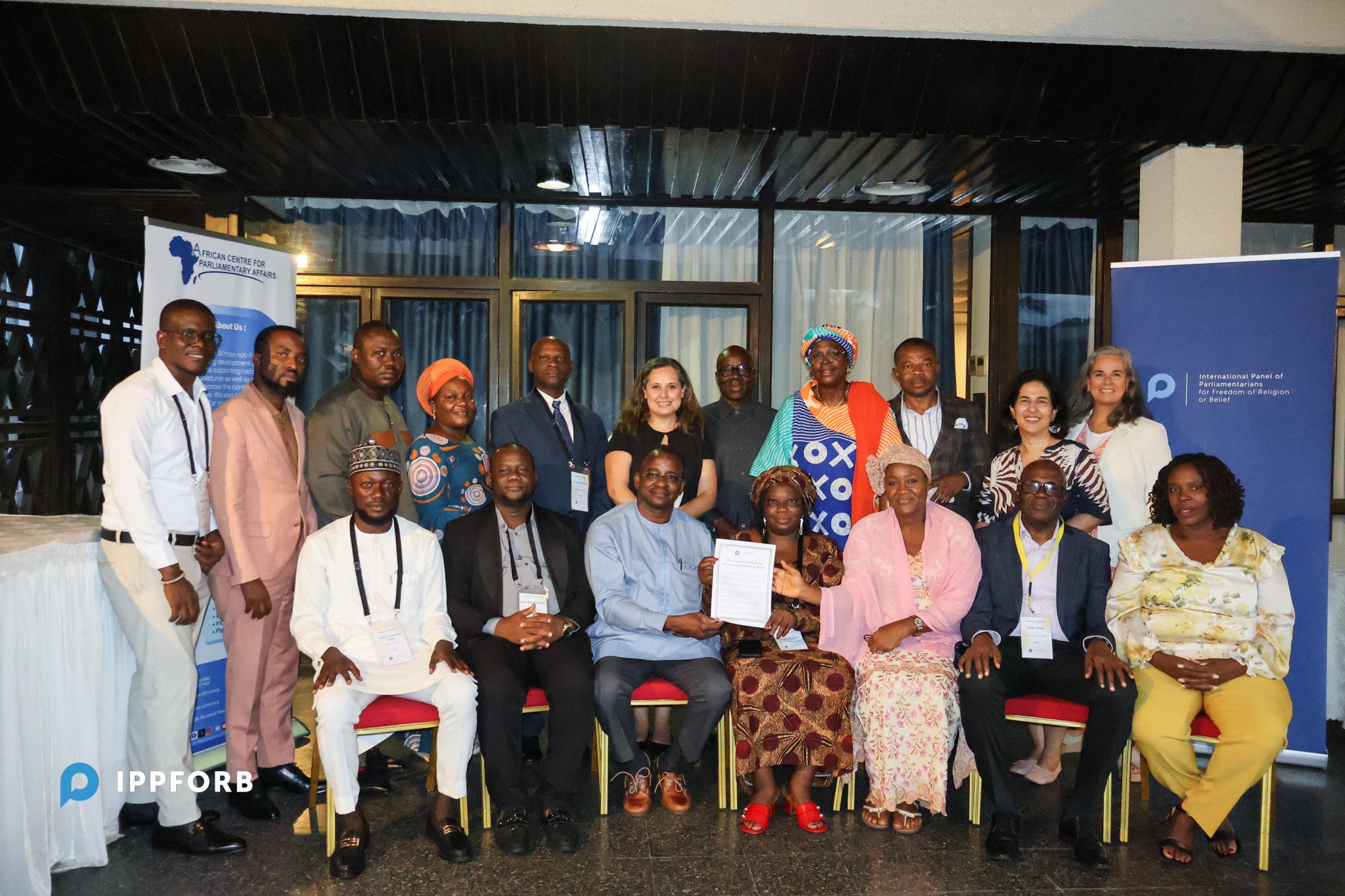
The Academy culminated in the signing of the Accra Declaration, a collective commitment by participating MPs to promote and protect FoRB in their home countries.
The Declaration outlines key expectations of African governments, including:
Upholding international human rights obligations related to FoRB
Preventing the misuse of religion for political gain
Responding effectively to religious‑based violence and supporting displaced populations
Repealing discriminatory laws and harmful cultural practices
Ensuring equal rights for women and girls, including inheritance and political participation
Aligning national legislation with international human rights standards
MPs also committed themselves to advancing these principles through their own legislative, oversight, and representative roles.
Strengthening Regional Cooperation
Throughout the Academy, participants highlighted the importance of cooperation among African parliaments to address shared challenges related to FoRB, peacebuilding, and social cohesion.
The Accra Academy marked a significant step in strengthening regional capacity and reaffirming the role of lawmakers as essential defenders of human rights.